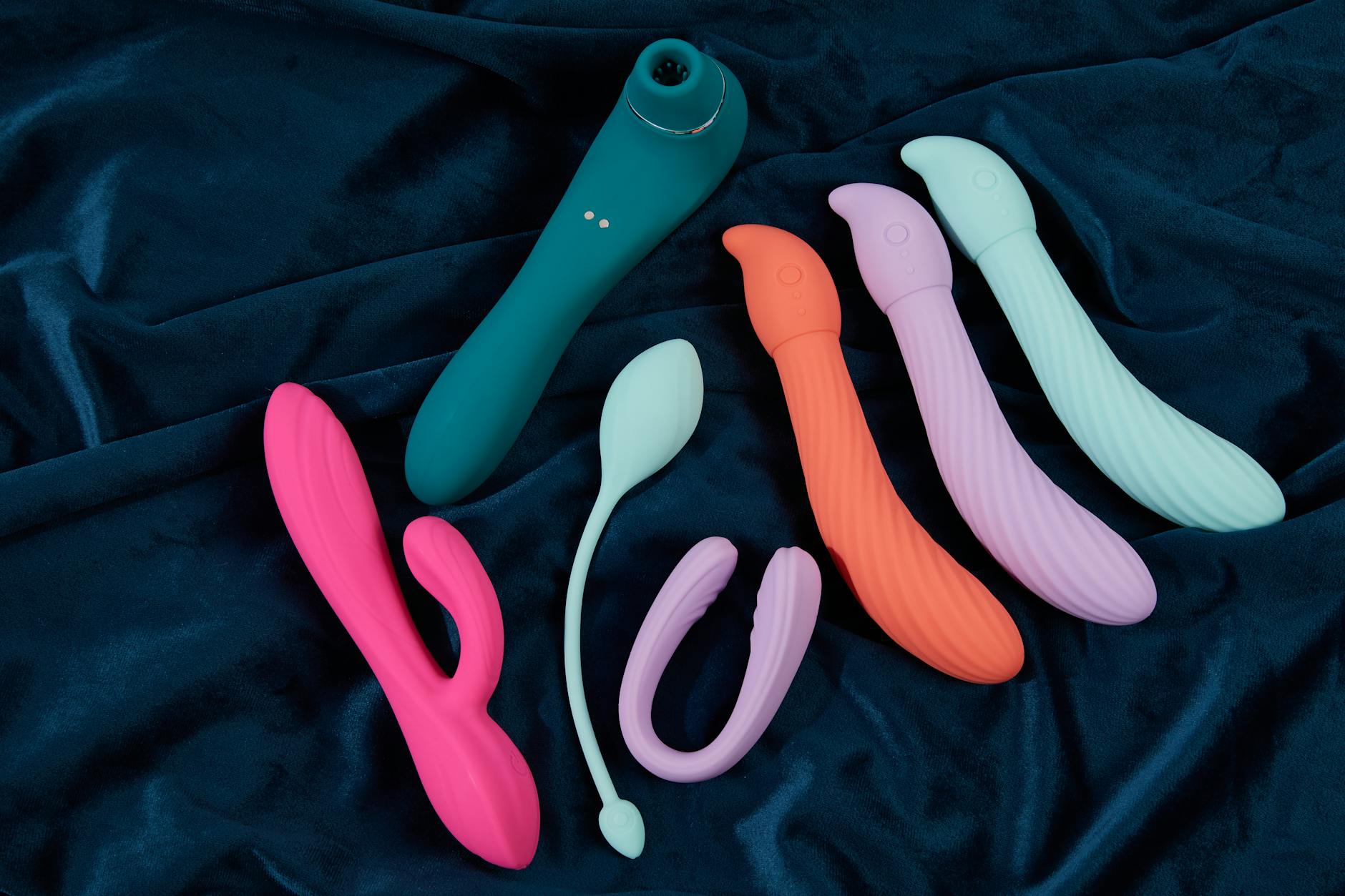
Why Lemon Vibrators Reduce Sensation During Menstruation
Your clitoris genuinely feels less during certain cycle phases. Here's what's actually happening, and why air-suction toys like the lemon vibrator adapt better than anything else.
Your clitoris changes throughout your menstrual cycle. Not metaphorically. Physiologically. The sensitivity, the blood flow, the way nerves respond to touch—all of it shifts as estrogen and progesterone rise and fall. And if you've noticed that vibrators feel less effective during certain phases, you're not imagining it. Your body is literally less responsive, and that's completely normal.
The frustrating part is that most people think the solution is to just push harder or use a stronger toy. That often backfires. You end up numb, frustrated, or worse, you stop trying altogether. But there's a smarter approach.
Estrogen peaks twice in your cycle: once during the follicular phase (leading up to ovulation) and again briefly at ovulation itself. When estrogen is high, blood flow to the clitoris increases, tissue swells slightly, and nerve sensitivity amplifies. This is why orgasms often feel easier to reach mid-cycle.
Then progesterone rises in the luteal phase (after ovulation). Progesterone dampens arousal signaling in the brain and reduces clitoral engorgement. Blood flow decreases. Sensation dulls. This is not a flaw. It's designed to redirect your body's energy toward other survival priorities. But it means that the same toy that worked beautifully on day 14 might feel completely ineffective on day 21.
Many people don't realize sensation also changes in the days right before and during menstruation. Progesterone drops sharply, but estrogen is also low. You're in a hormonal valley. Clitoral tissue is thinner, less engorged, and nerve endings are less excitable. Friction-based vibrators that rely on rapid stimulation of already-sensitive tissue often feel uncomfortable or numb.
This is where lemon vibrators and other air-suction toys shift the game entirely. Instead of relying on friction or rapid vibration against a less-responsive surface, they use gentle suction to draw the clitoral tissue into the cup and stimulate the entire nerve cluster at once.
That mechanism has a few advantages during low-sensation phases of your cycle:
First, suction bypasses the need for direct tissue sensitivity. You're not asking individual nerve endings to fire. You're creating a broader wave of pressure and release that stimulates deeper nerve clusters. Even when surface sensation is muted, those deeper nerves still respond.
Second, the sensation feels different enough from regular vibration that your nervous system doesn't habituate (numb out) the same way. Your brain perceives novelty, which keeps arousal climbing.
Third, lemon vibrators and similar suction toys scale intensity in a way that doesn't require painful pressure. You can dial down the suction pattern rather than cranking up vibration speed. Gentler doesn't mean weaker—it means smarter.
You don't need a different toy for each phase. You need a smarter approach to the one you have. Here's what I recommend to clients:
Days 1-5 (Menstruation). Sensation is lowest. Start with pattern 1 or 2 on your lemon vibrator. Extend your warm-up time. Use water-based lubricant even though you're menstruating—it helps the seal on the suction cup work better and feels more comfortable. Many people assume they shouldn't use internal toys during their period, but external clitoral toys are completely fine. Pad changes, then resume.
Days 6-14 (Follicular phase into ovulation). Sensitivity climbs. You can explore higher intensity patterns. This is when your body is most responsive, so you might find new sensations or patterns that felt too strong before now feel just right. Experiment here.
Days 15-28 (Luteal phase). Sensation dulls again as progesterone rises. Dial back to patterns 2-4, depending on the week. Some people find that longer duration—staying in one pattern for 5-10 minutes rather than constantly changing—works better than chasing novelty. Your nervous system is less excitable, so patience becomes part of the pleasure.
Here's something I notice that nobody talks about: the shame cycle around cycle-based pleasure changes. You feel less sensation, assume something is wrong with your body or your toy, get frustrated, stop trying. Then the shame kicks in. "Why can't I just enjoy this all month?"
Stop. Your body is working exactly as designed. Pleasure doesn't need to be constant to be real. In fact, the best sex lives I see are the ones where people adapt. You're not broken. You're cyclical. That's not a disadvantage. It's data.
Many of my clients find that leaning into their cycle rather than fighting it actually deepens their relationship with pleasure. You learn your body's rhythms. You get better at reading what you need and asking for it. You stop expecting yourself to be the same every single day. That's a huge shift.
Cycle-based sensation changes are normal. But if sensation has dropped across your entire cycle—not just during low-hormone phases—that's worth investigating. Birth control, antidepressants, thyroid issues, and hormonal changes can all flatten sensitivity permanently.
Similarly, if you're experiencing pain or excessive numbness during any phase, talk to a healthcare provider. That's not normal cycle variation. That might be nerve involvement, tissue changes, or something worth addressing with a pelvic health specialist.
But standard dips in sensitivity at certain points in your cycle? That's your body being intelligent. The key is working with it, not against it. Lemon vibrators give you the flexibility to do that.
Your pleasure is supposed to change. Your hormones, your stress, your relationship status, your sleep, your fitness—they all affect how your body responds to touch. Instead of chasing consistent sensation, learn to chase what your body is offering right now. Some cycles you'll have explosive orgasms mid-way through. Others you'll find deeper, longer-lasting satisfaction during your luteal phase. Both are real. Both are worth your time.
The toy isn't the problem. The expectation that you should feel the same all month is the problem. Let that go.