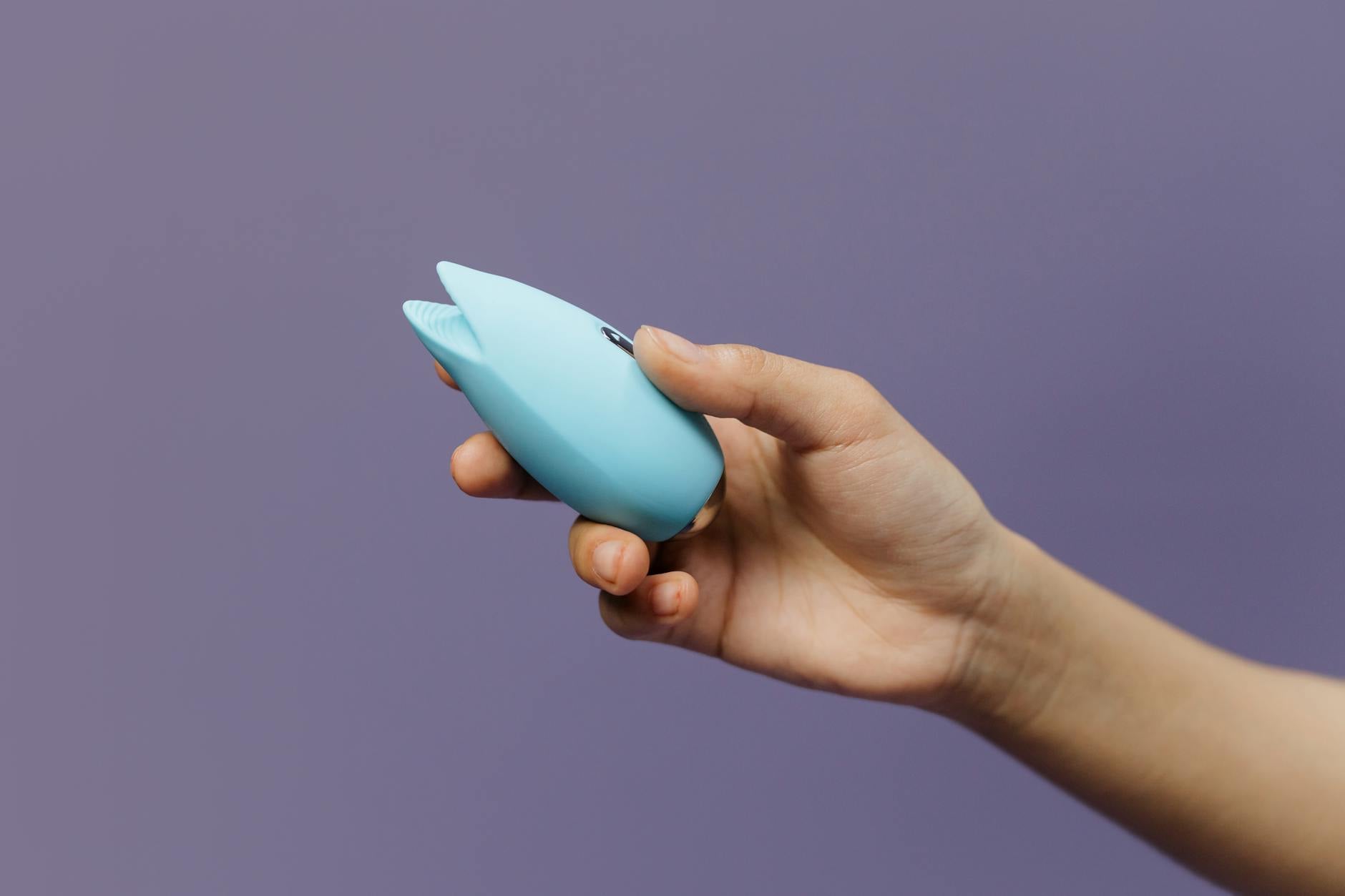
Why Lemon Vibrators Feel Better for Sensitive Clitorises After Stopping Birth Control
Your clitoris is actually changing right now. Here's what's happening, why standard vibrators might feel uncomfortable, and why lemon suction toys work differently.
Let's be real. You stop hormonal birth control and suddenly your clitoris feels like a completely different body part. What used to feel good now feels tender. What used to take ten minutes now takes twenty. And that vibrator you loved? It might feel genuinely uncomfortable now.
This isn't in your head. Your clitoris is actually changing. And if you're looking for a way back to pleasure that feels good on your newly sensitive tissue, lemon vibrators work differently than you might expect.
Hormonal contraception suppresses your natural hormone cycle. For years, your estrogen and testosterone stay artificially stable at lower levels. This means the tissue of your vulva and clitoris adapts to that environment. The tissue becomes thinner in some places, less vascularized (less blood flow) in others, and less responsive to touch overall.
Your clitoris doesn't actually shrink. What happens is more subtle: the tissue is less engorged, the nerve endings are less sensitized to certain types of stimulation, and the whole area is operating at a lower baseline of arousal readiness.
When you stop taking hormonal birth control, your natural hormones come back online. Estrogen and testosterone begin cycling again. This is actually good news for pleasure. But it also means your clitoris is going through a transition period that can feel uncomfortable or overly sensitive.
People often describe the first few months off birth control as "my clitoris is angry at me." That's a weirdly accurate way to describe it.
As hormone levels normalize, the tissue thickens again. Blood flow increases. The nerve endings become more densely packed and more responsive. This is fundamentally healthy. But it also means that stimulation that felt perfect before now feels too intense, too direct, or too sharp.
Standard vibrators work by directly stimulating the nerve endings on the surface of your clitoris through rapid vibrations. When your tissue is newly sensitized, this direct contact can feel overwhelming. Some people describe it as almost painful, even at low intensities.
This period usually lasts between three to six months, though it varies wildly. Some people adjust within weeks. Others take longer. Your body is rebuilding its relationship with pleasure from the ground up.
Here's where lemon vibrators change the game. They work through suction and gentle pulsation, not direct vibration. Instead of buzzing against your clitoris, a suction toy creates a seal around the tissue and draws it gently upward, stimulating the nerve endings through indirect pressure.
This matters because indirect stimulation is less likely to feel raw or overly intense on newly sensitized tissue. The sensation is broader, less pinpoint, and more diffuse. It's almost like the difference between someone pressing directly on a bruise versus pressing around it.
When you're transitioning off hormonal birth control, this gentler approach often feels revelatory. You get stimulation without that sharp edge. Many people find that they can enjoy longer sessions without discomfort, and the kind of pleasure they experience is actually deeper and more building than the direct stimulation they're used to.
The first month off birth control is usually the roughest. Your clitoris is sensitive, your hormones are fluctuating wildly, and everything feels uncertain. This is not the time to aggressively test your pleasure capacity.
Weeks two through four: You might notice your natural lubrication changing. This is your body recalibrating. Your arousal might take longer to build, but once it does, it often feels more intense than it did on hormonal contraception.
Month two: Sensitivity usually begins to normalize. This is when many people start experimenting again. If you're using a lemon clitoral vibrator, you might find you can increase intensity slightly, or enjoy longer sessions without discomfort.
Months three through six: Most people report that their clitoris has settled into its new normal. Pleasure feels accessible again, but often different. Deeper. More whole-body. Many people say their orgasms are more intense off hormonal birth control, which tracks with the neurology.
Start lower than you think you need to. If you normally use a lemon vibrator at intensity level 4, start at level 2. Your tissue is more responsive now. You might be surprised how much sensation you feel at lower settings.
Use water-based lubricant, even if you don't usually. Hormonal birth control suppresses natural lubrication. Even though your body is ramping this back up, external lubricant takes pressure off the transition and makes everything feel more comfortable. This is temporary. Most people phase it out naturally within a few months.
Extend your warm-up time. Your clitoris needs more mental and physical foreplay to wake up now. Budget 15 to 20 minutes of gentle stimulation before moving to higher intensities. This gives your arousal time to build naturally.
Your clitoris has about 8,000 nerve endings packed into a small area. When you're on hormonal birth control, these nerve endings are less densely packed and less sensitized overall. When you come off hormonal contraception, the packing density increases and the nerves become more reactive.
This heightened sensitivity is actually a sign that your hormones are normalizing. But it also means that stimulation methods that worked before might overstimulate now.
Suction-based lemon vibrators distribute stimulation across a broader area. Instead of concentrating all that nerve activation in one pinpoint, the sensation spreads. This is less intense, more comfortable, and paradoxically often leads to stronger, more satisfying orgasms once your tissue adjusts. The broader stimulation creates a cascade of nerve activation rather than a sharp spike.
Sensitivity and discomfort during the post-pill transition are normal. But there are moments when you should get professional input.
If pain is sharp or burning and doesn't improve after four weeks, see a gynecologist. Sometimes people develop contact dermatitis or other inflammatory responses to the transition. If there's bleeding or unusual discharge, that also warrants a checkup.
If you notice that arousal isn't returning at all after three months, talk to your doctor. Hormonal imbalances after stopping birth control are rare but possible, and they're treatable.
If you were on hormonal birth control to manage a condition like PCOS or endometriosis, your symptoms might resurface. That's a separate conversation from pleasure sensitivity, but it's worth planning for with your doctor before stopping contraception.
Most people find that after the initial adjustment window, pleasure off hormonal birth control is actually better than it was on it. Your natural hormones create a more varied, more responsive clitoris. Your sensitivity isn't raw anymore. It's alive.
Many people who've switched from standard vibrators to lemon clitoral vibrators during this transition find they stay with suction-based toys even after their tissue has fully normalized. The sensation is just different. Broader. More pleasurable.
If you're in that early post-pill phase right now, give yourself permission to explore at a slower pace. Your body is recalibrating something fundamental. A lemon vibrator designed for sensitive tissue can make that process feel good instead of frustrating.
Most people experience noticeable changes within the first two weeks, with significant adjustment happening over three to six months. Sensitivity peaks around week two to three, then gradually normalizes. Some people feel completely adjusted within a month. Others take closer to six months. Tracking your own cycle helps you understand your personal timeline.
Yes, but start gently. Your tissue is transitioning, so lower intensity settings and shorter sessions work better initially. Most people find that suction-based lemon clitoral vibrators are actually more comfortable than traditional vibrators during this adjustment phase because they work indirectly rather than through direct vibration.
Your clitoris isn't numb. It's in transition. Hormonal birth control suppresses baseline arousal and tissue sensitivity. When you stop, it takes time for that system to wake back up. What feels like numbness is often just lower responsiveness temporarily. This usually resolves within four to eight weeks. If numbness persists beyond that, see your doctor.
For many people, yes. Lemon vibrators use suction rather than direct vibration, which feels less intense on newly sensitive tissue. Traditional vibrators work directly against your clitoris, which can feel overwhelming during the post-pill transition. That said, sensitivity varies. Some people prefer vibration even during transition. Try both if you can.
It's normal for interest to fluctuate during the transition. Hormones affect desire significantly. However, if you have zero interest after two months off birth control, check in with your doctor. Sometimes stopping hormonal contraception uncovers a desire mismatch in a relationship, which is separate from hormonal adjustment. Both are real conversations worth having.
You might need more time, lower intensity, or a different approach entirely. Some people find that hands-only pleasure works best during the transition. Others switch to external clitoral massagers that operate differently. And some people benefit from talking to a sex therapist about the transition. Your pleasure matters, and finding what works for your body during this shift is part of reclaiming it. If persistent discomfort continues beyond six months, talk to a gynecologist to rule out underlying conditions.
Stopping hormonal birth control is a significant transition for your whole endocrine system. Your clitoris is just one part of that, but it's an important one. Taking time to understand how your body is changing, and finding tools like lemon vibrators that work with that transition rather than against it, is an act of self-care.
Your pleasure matters. And you deserve to feel good during this shift. If you're curious about exploring suction-based options, Hello Nancy makes toys specifically designed for varied sensitivity levels.