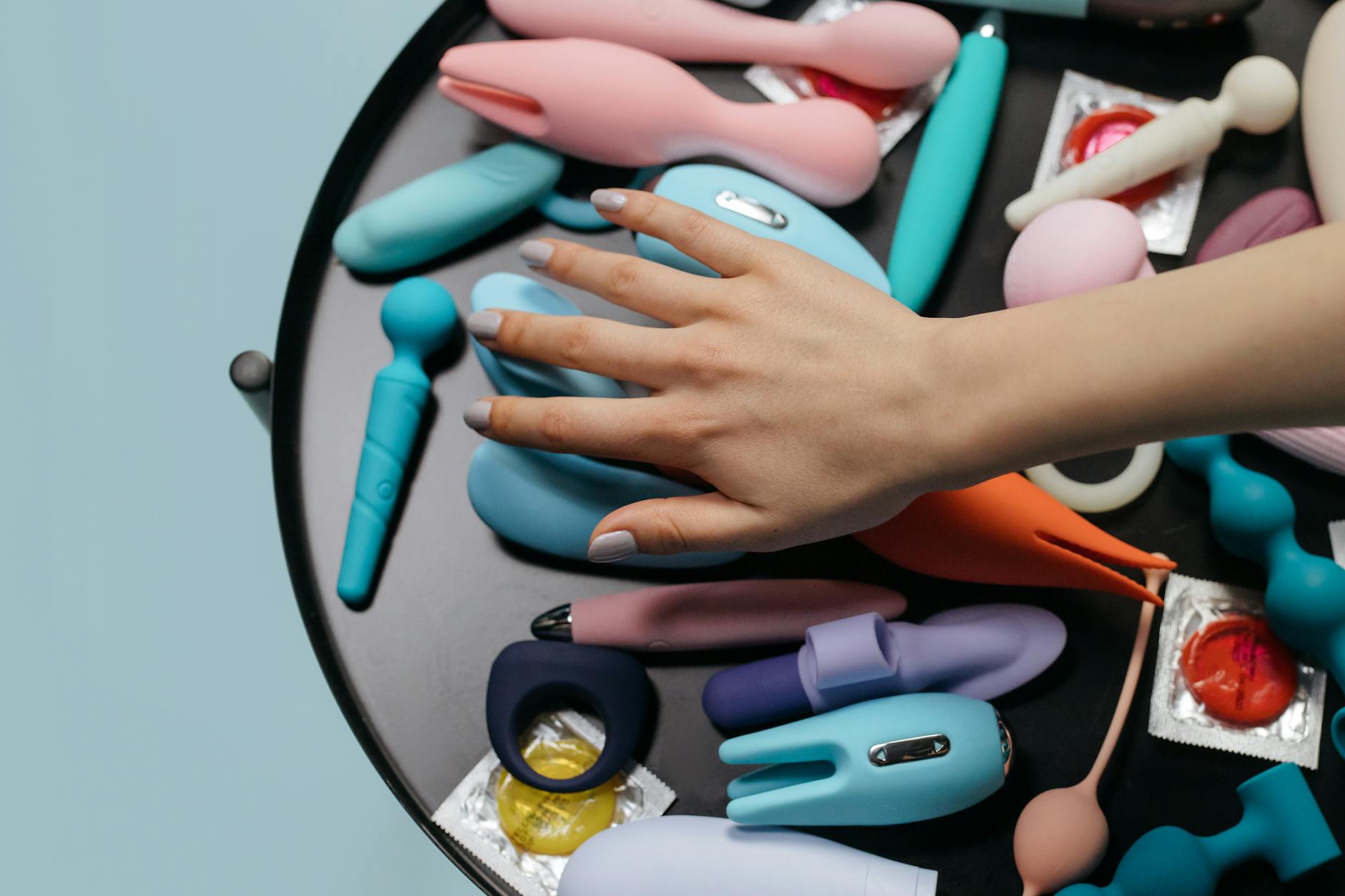
How to use lemon vibrators and talk about pleasure with a partner
Most couples don't communicate during sex. Lemon vibrators change that. Here's how to introduce them, ask for what you want, and stay connected when the vulnerability gets real.
Most people introduce a toy into their relationship backwards. They either sneak it in (which erodes trust) or they announce it like a business proposal ("I'd like to suggest we incorporate a vibrator"). Both approaches block the actual conversation that needs to happen: what do you want, what does your partner want, and how do you ask for it without shame?
Lemon vibrators change this dynamic. They're not intimidating. They're not a statement about your relationship being "broken." They're literally just a tool for pleasure. But introducing that tool opens the door to a conversation about communication itself.
Here's what I see in my practice: couples who introduce lemon clitoral vibrators together report that they start talking about pleasure more honestly in general. It's not about the vibrator itself. It's about what the vibrator gives permission to discuss.
A standard toy can feel loaded with meaning ("Does he think I can't get there on my own?"). A lemon vibrator feels playful. It's simple technology. It's literally just suction and sensation. That simplicity makes it easier to say out loud: "I want to try this because it feels good."
When you remove shame from the object, you remove shame from the conversation.
Don't wait for a perfect moment. There's no such thing. Here's what works:
Start outside the bedroom. "Hey, I've been reading about lemon vibrators. Have you heard of them? They work differently from regular vibrators because of suction instead of just buzzing. I'm curious if you'd want to try one together." That's it. Casual, informational, invitation-based.
Own your desire. Don't say "Maybe we should get a toy because things are boring." Say "I want to try this because I think it would feel amazing." Your pleasure is not a diagnosis of the relationship. It's just what you want.
Expect curiosity, not judgment. Most partners respond with questions: How does it work? Will it replace me? What patterns does it have? These aren't rejections. They're engagement. Answer them. Show them videos if it helps.
Handle the no gracefully. Some partners need time. Some have trauma around toys. Some just aren't ready. You can say: "I hear you. Let's table it for now. But I'm still interested, so let's talk about it again in a few months." Pushing turns invitation into pressure.
This is where most couples freeze up. They get the toy, they turn it on, and suddenly no one's talking. That silence kills intimacy.
You don't need a script. You just need to narrate what's actually happening.
"That feels incredible on the left side." "Try the second pattern." "Move it slower." "I want more pressure." These are not interruptions. They're connection. They're letting your partner inside your experience.
If you're the receiving partner, stay present and vocal. Don't fall silent and hope they figure it out. If you're the one wielding the lemon vibrator, stay curious. Ask: "Does that pattern work? Should I try another one? What do you want right now?"
The vibrator itself is secondary. The conversation is the engine.
Fear 1: "If I ask for what I want, he'll feel rejected." He won't. He'll feel included. What actually creates rejection is silence and resentment. "I want to use a lemon vibrator because it feels good" is not a statement about him. It's a statement about you.
Fear 2: "What if she thinks I'm suggesting we're not compatible?" Talk about that directly. "I want to try this because I think we could both have more pleasure. This isn't about what's wrong. It's about what could be more fun." That's not a suggestion. That's a fact.
Fear 3: "What if I orgasm and it's obvious the vibrator did what I couldn't do on my own?" Yes. That's the point. You're supposed to notice. And your partner should be thrilled. If someone feels threatened by your pleasure, that's a different conversation entirely, but it's the conversation you need to have.
Your orgasm doesn't diminish your partner. It's not a zero-sum game. When you're more satisfied, your partner gets more of you.
When you're choosing which lemon vibrator patterns to use, the simpler ones (patterns 1 and 2) actually create more space for talking. You're not getting overwhelmed by sensation. You can stay present in the room.
Start low, go slow, stay chatty. "How does that feel?" "Want me to try this one?" "Tell me if you want me to switch." The device is just an excuse to keep asking your partner what they want.
The trickier pattern (pattern 3 and up) is beautiful, but it often shuts down communication because the sensation is so intense. Save those for later, when you've already practiced talking during pleasure.
Sometimes you'll use a lemon vibrator and realize you've been avoiding a deeper issue. Maybe you wanted it because you're disconnected. Maybe your partner resisted it because they're hurt about something else. The toy doesn't fix that. But it can surface it.
If that happens, pause. Put the device away. Talk about what came up. "I notice I really wanted this and you seemed hesitant. I want to understand what's going on for you." That's not a failure. That's actually the moment where real connection happens.
The conversation doesn't end when the vibrator goes back in the drawer. You keep building on it.
"I really liked when you did X." "That pattern felt intense in a good way." "Next time, I want to try it with..." You're teaching each other. You're building a library of what works. You're saying: I pay attention to your pleasure. I want to understand you better.
This is what sustainable relationships do. They get curious. They try things. They talk about what worked. They try again.
When you normalize communication around pleasure early and often, everything else gets easier. Money conversations. Family stuff. Resentment that's been building for years. If you can ask for what you want sexually, you can ask for what you want in every other domain of life.
Start with education, not the device. "I've been reading about how these lemon clitoral vibrators work differently because they use suction. It sounds interesting. Would you want to learn more together?" Curiosity is less threatening than a direct ask. Let them ask questions. Answer honestly. If they're interested, you can order one together and explore it with zero pressure. If they're not, you've planted a seed and can revisit it later.
This worry is so common, and it's worth taking seriously. Say this: "A vibrator is a tool for pleasure. You are my partner. These are completely different things. I'm actually inviting you into this because I want more connection with you, not less." Then show them how it works. Let them see it's not threatening. Many people's concerns evaporate once they understand the technology isn't a replacement. It's an addition.
Lemon vibrators work beautifully during partnered sex. You can use them during penetration for blended sensation. You can use them while your partner is inside you or while you're using your hands. You can use them together foreplay. The key is communication. "I want to try this while we're together" is different from "I want to use this instead of you." The conversation matters more than the configuration.
You don't owe a play-by-play of your solo time. But if you're using a lemon vibrator as a couple, transparency helps. "I've been using this solo and I really like pattern 2. I'd love to try it together." That's sharing information, not oversharing. If your partner has asked questions about solo exploration, answer them honestly. Honesty builds safety. Secrecy builds distance.
That's worth sitting with. Not because it means something is wrong with your relationship, but because it's information. Are you disconnected? Are you stressed? Are you not communicating about what you want? A lemon vibrator doesn't fix relationship issues. But it can point you toward them so you can actually address them. Talk to your partner. Get curious. Maybe see a therapist. The vibrator isn't the problem. It's just the mirror.
You don't know until you ask. Don't guess. Don't hint. Hinting creates resentment. Ask directly, outside the bedroom, in a low-pressure moment. "I'm curious if you'd ever want to try a lemon vibrator together." Their answer tells you everything. If it's yes, you're good. If it's no, you know where you stand. If it's "I don't know," that's an invitation for more conversation. Work with what's true, not what you hope is true.
Lemon vibrators are just pleasure devices. But they're also conversation starters. They're permission slips to ask for what you want. They're proof that you can be vulnerable with your partner and survive it. They're evidence that your pleasure matters.
The device itself is the easy part. The communication is the hard part. But it's also the part that actually transforms relationships.
If you want to deepen connection with your partner, start here. Not with the vibrator. With the question: "What do you want?" And the willingness to answer it yourself.
Everything else follows from there.
If you're navigating relationship communication around pleasure and it feels stuck, reach out to us. We're here to help with questions or to point you toward resources that matter.