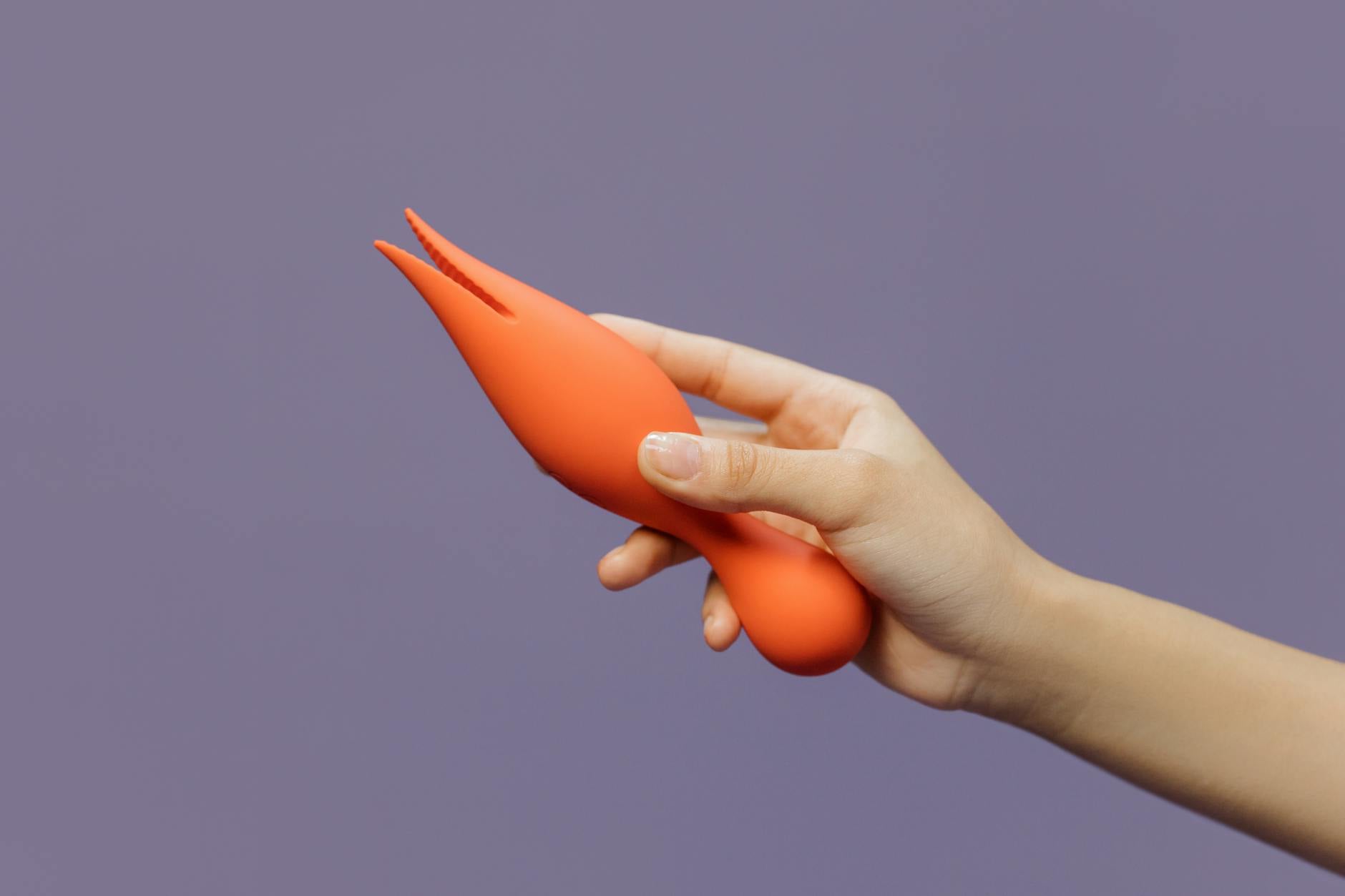
How Lemon Vibrators Help With Reduced Clitoral Sensitivity From Age
Your clitoris doesn't stop working as you age. It changes. And the right tool makes all the difference. Here's what actually shifts and why lemon vibrators work differently than you might expect.
Honestly though. Reduced clitoral sensitivity with age is not a failure of your body. It's not something you've done wrong. It's a measurable shift in nerve density, blood flow, and tissue thickness. And it's completely reversible with the right approach.
Here's what research shows: clitoral nerve endings don't disappear. But the vascular tissue supporting them changes. Estrogen levels shift. The skin itself becomes slightly less responsive to direct stimulation. Most people notice this somewhere in their late 40s or 50s, though it can happen earlier, and it can happen later.
The frustrating part? Most vibrators on the market are designed for the sensitivity you had at 25. Not the sensitivity you have now.
Conventional vibrating wands and bullet vibrators work by creating rapid mechanical oscillation directly on the clitoris. Think of it like tapping your fingertip on a table, but very fast. At 25, when your clitoral tissue is thicker and more vascular, that direct friction creates a chain reaction in your nervous system. Arousal builds.
At 55, the same vibrator feels weaker. Sometimes much weaker. Not because you're broken. Because the tissue that responds to that type of stimulation has become less sensitive to it.
Some people try to fix this by cranking the vibrator up to the highest setting. That often backfires. It can numb the tissue further, create irritation, or feel uncomfortable rather than pleasurable.
Lemon vibrators and other clitoral suction devices use a completely different mechanism. Instead of vibration, they create gentle rhythmic suction around the clitoral head and glans. This stimulates a different set of nerve pathways than direct vibration does.
Think of it like this: a regular vibrator is knocking on a door. A suction vibrator is creating a gentle pressure change around the door. Your nervous system registers these as two entirely different signals.
For people experiencing age-related sensitivity loss, this distinction matters wildly. The suction mechanism activates nerves that are still highly responsive, even as direct vibration sensitivity wanes. Many of my clients report that lemon clitoral vibrators feel stronger, not weaker, once they switch from traditional vibrators.
The Lem Massager, for example, uses air-pulse technology that creates suction waves. At the lowest setting on a Lem, many people report feeling more intense sensation than at the highest setting on their old vibrator.
Here's something most articles skip: blood flow is everything. As you age, it takes longer for blood to engorge the clitoral tissue. This is not a psychological thing. It's vascular.
Your body hasn't forgotten how to do this. It just needs more time and often a bit more stimulation to get there. Budget 15 to 25 minutes for arousal instead of five. Use lubrication even if you don't think you need it. The extra slickness helps the clitoral head stay hydrated and more responsive.
Once blood flow is established, sensitivity returns. Not to what it was at 25, but to something different. Often more localized. Sometimes more intense. Different, not worse.
I've worked with dozens of people who abandoned vibrators entirely because they felt like they weren't working anymore. Then they tried a lemon suction vibrator and suddenly pleasure came back into focus.
This isn't magic. It's engineering matched to physiology. When you switch to a tool that actually complements how your nervous system works now, rather than fighting against it, the whole experience changes.
Lemon adult toys and lemon sexual toys specifically designed around suction tend to have a learning curve that's much shorter than people expect. Because the sensation is so different from what they're used to, sometimes the first experience feels odd. But by the second or third time, most people report that it clicks. The pleasure response becomes obvious.
Tool matters, but it's not the whole story. Three other things I recommend to almost every client dealing with age-related sensitivity shifts.
Kegel exercises, but with intention. Pelvic floor strength directly affects sensation. A strong pelvic floor means better blood flow and more responsive tissue. But here's the part most people miss: you also need to practice relaxing these muscles fully. Many people over 50 have chronically tense pelvic floors without realizing it. That tension reduces sensation. Try alternating between five-second squeezes and five-second full releases. Do this daily for a month and you'll notice a difference.
Consistent solo practice. Your body needs regular stimulation to maintain vascular responsiveness. This isn't about achieving orgasm every time. It's about giving your nervous system a reason to stay engaged. Even 15 minutes a few times a week creates measurable improvements in sensation over time.
Sleep and stress management. This sounds like a non-sequitur until you realize that cortisol directly suppresses blood flow to the genitals. High stress literally reduces sensitivity. Better sleep, regular movement, and activities that lower cortisol all contribute to better sexual sensation.
If you're in a relationship, your partner needs to understand this shift is normal, not a reflection on attraction or desire. Many partners assume reduced responsiveness means you're less interested in them. It doesn't.
What helps: explaining this as a tool upgrade, not a relationship problem. "I want to explore this with you because I think it'll make things better for both of us." Lemon clitoral vibrators work beautifully in partnered situations because they don't require as much direct pressure or friction. They can actually reduce discomfort that sometimes emerges with age-related sensitivity changes.
If sensation loss is sudden, severe, or accompanied by pain, that's worth mentioning to a gynecologist. Sometimes rapid sensitivity changes signal hormonal shifts that deserve attention. Sometimes it's just age. But you want to know which.
Genitourinary syndrome of menopause (GSM), if you're in that phase, is real and treatable. Topical estrogen creams can restore some tissue thickness and sensitivity. Doesn't cure everything, but can be helpful.
Hormone therapy is another option some people explore. Not everyone wants it, not everyone needs it. But if sensation loss is significantly affecting your quality of life, it's worth a conversation with a provider who specializes in midlife women's health.
Sensitivity changes vary wildly based on genetics, vascular health, hormone levels, and whether you have ongoing sexual activity. Some people notice zero change. Others notice significant shifts. Both are completely normal. Partner comparisons usually create frustration rather than useful information. Your body isn't doing anything wrong.
No, not to what it was at 25. But yes, it can improve substantially. Blood flow can be restored. Pelvic floor strength can return. Nerve responsiveness can improve with consistent stimulation and the right tools. Most people report significant improvement within 4 to 8 weeks of regular practice with a lemon vibrator or similar suction tool.
Very often, yes. Suction feels completely different from vibration. Your brain has to learn the new signal. Most people need two or three sessions to figure out what the sensation is and what pattern works for them. By session three or four, it usually becomes obvious why suction works better.
Not inherently. Different, often. Sometimes more satisfying because you have more awareness of what you like and less anxiety about performance. Many people report their most intense orgasms happening after 50, especially once they find the right tool and stop fighting their body's natural changes.
Absolutely. Your body has changed since you started using that tool. Your body deserves a tool that matches it now, not a decade ago. The learning curve is short, and most people notice immediate improvement in sensation once they adjust to suction.
Some people notice something different on the first try. Real, measurable improvement usually appears within three to five sessions of regular use. Consistency matters more than intensity. A Lem vibrator at low suction used regularly works better than sporadic use at high suction.
Your nervous system does not shut down at 45 or 50 or 60. It rewires. The clitoral nerve endings that made you feel electricity at 25 are still there. They're just responding to a different type of signal now.
When you match your tools and approach to how your body actually works in this phase of life, pleasure comes roaring back. Sometimes stronger than before because you have less distraction, more confidence, and tools designed for this body, not your body from 30 years ago.
The Lem Massager and other lemon vibrators exist because this shift is real, common, and absolutely addressable. Your pleasure matters now as much as it ever did. You just get to pursue it smarter.