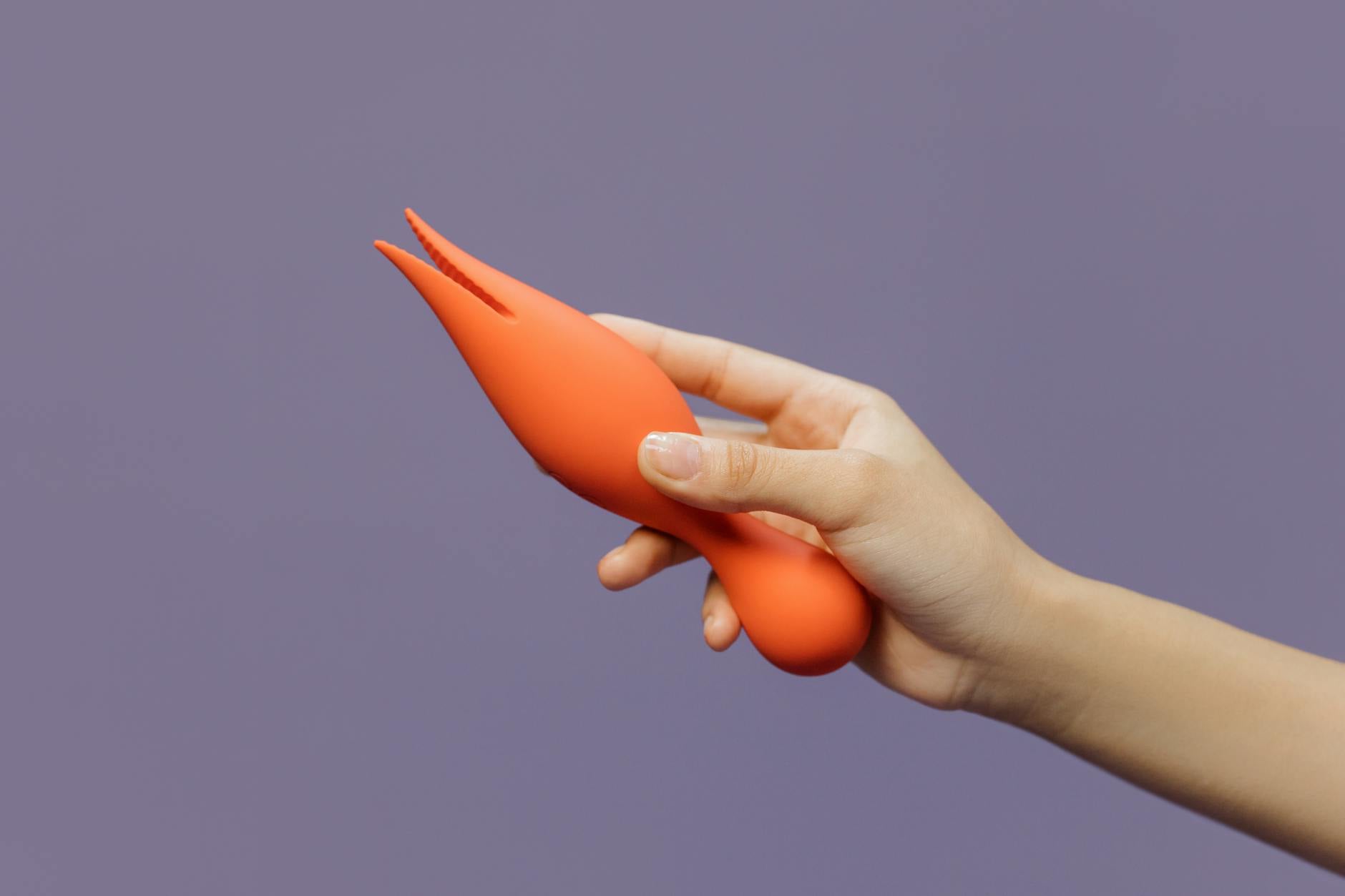
How Lemon Vibrators Help When You Have Pain During Penetration
Penetrative discomfort doesn't end pleasure. Here's how air-suction clitoral vibrators redirect focus, rebuild confidence, and create new pathways to orgasm.
It's wildly common, and it's also wildly underdiscussed. Studies suggest that one in four women experiences painful intercourse at some point. That doesn't make it normal in the sense of 'you have to accept it.' It means you're not alone, and it means there are actual paths forward that don't involve just enduring it or giving up on sex altogether.
Penetrative pain has a cascade of ripple effects. Physical discomfort breeds anxiety. Anxiety tightens the pelvic floor. A tighter pelvic floor makes penetration hurt more. The next time you're intimate, you're already bracing yourself. Your brain's threat detection fires before anything even happens. That's not weakness. That's your nervous system doing exactly what it was designed to do, just in a context where it's working against you.
Here's where clitoral vibrators like the lemon vibrator enter the picture. They don't fix the underlying cause. But they create a shortcut around the pain cycle by moving the center of pleasure away from penetration entirely.
The causes matter because they determine the fix. Vulvodynia (generalized nerve sensitivity in the vulva) feels different from vaginismus (pelvic floor muscle clenching). Vaginal atrophy from low estrogen feels different from scar tissue after childbirth or pelvic surgery.
Some causes are straightforward medical issues. Endometriosis, pelvic inflammatory disease, or ovarian cysts can all create real physical obstruction or inflammation. Your GP or gynecologist should rule these out first. If nothing shows up on imaging, that doesn't mean the pain is psychological. It means the pain is likely neuropathic or musculoskeletal, which is treated differently.
Most penetrative pain falls into two categories. Muscular tension (the pelvic floor is squeezing too hard, usually from anxiety or past trauma). Or neuropathic sensitivity (the nerve endings are firing more easily than they should, sometimes from inflammation, sometimes from no clear cause). Both respond to a shift in focus and sensation.
When you move from penetration-focused sex to clitoral pleasure, you're literally changing the neural pathway firing. The clitoris has over 8,000 nerve endings concentrated in a tiny space. The vaginal canal has comparatively sparse nerve density. More nerve endings means faster, more reliable sensation. Easier arousal. Easier orgasm.
For someone with penetrative pain, this shift is huge. You're not trying harder at something that hurts. You're succeeding at something that feels good. Your brain registers that as a win. Your nervous system relaxes. The pelvic floor releases a little.
That's why air-suction vibrators like The Lem work so well in this context. They create a very specific sensation that doesn't require you to build arousal from a place of anxiety. You can start at comfort and build from there. No expectation of penetration. No internal pressure. Just external stimulation that you control completely.
Traditional vibrators rely on mechanical vibration against tissue. If your vulva is sensitive or inflamed, that vibration can feel overwhelming or even painful. Air-suction technology (the kind used in lemon clitoral vibrators) works differently. It uses gentle suction pulses to stimulate the clitoris without direct friction.
The suction approach has three advantages for pain situations. First, it's gentler. You can start at the lowest setting and build slowly without triggering nerve sensitivity. Second, it's more consistent. The sensation doesn't depend on pressure or angle the way vibration does. Third, it feels qualitatively different. Many people with penetrative pain find that they respond to suction in ways they don't respond to vibration.
The psychological benefit is equally important. When you use a lemon vibrator or similar clitoral device solo or with a partner, you're creating a pleasure ritual that isn't tied to penetration. Over time, your brain starts associating sex with orgasm from clitoral stimulation, not with the bracing anxiety of penetration. That association shift is powerful.
Many people with penetrative pain have spent months or years in a stress loop. They want penetrative sex. It hurts. They try anyway because they think they should. It reinforces the pain and fear. They approach the next time already tense.
Clitoral vibrators interrupt that loop by offering a success experience. You use The Lem, you feel good, you have an orgasm. Your nervous system learns that sex can feel good. That's not a small thing. It rewires the threat response.
Start with solo exploration. Get to know how the lemon clitoral vibrator feels at each intensity level. Notice what pattern feels best. This sounds basic, but if you've been avoiding sexual pleasure because of pain, you might not know your preferences anymore. Solo time gives you that back.
When you're ready to bring a partner in, the vibrator becomes a communication tool. You're showing them exactly what feels good. You're in control. You can adjust intensity or rhythm instantly. If something doesn't feel right, you stop. No negotiation, no explanation needed. That level of agency is healing.
Clitoral vibrators are not a substitute for addressing the underlying cause. If you have vulvodynia, pelvic floor dysfunction, or endometriosis, you likely need treatment tailored to that diagnosis. That might be pelvic floor physical therapy, topical treatments, medication, or other interventions. Work with a pelvic health specialist if you can.
But while you're addressing the cause, clitoral pleasure becomes a way to maintain your sexuality. You're not waiting for pain to resolve before you get to have good sex. You're having good sex now, in a way that works with your body instead of against it.
Many people find that as they work with a physical therapist on pelvic floor tension, using a lemon vibrator actually speeds up progress. Why? Because you're practicing relaxation in a pleasurable context, not just a clinical one. Your pelvic floor learns that it doesn't have to clench. You're teaching it through sensation and reward, not just through stretches.
If you want penetrative sex eventually, the goal isn't to stay in clitoral-only territory forever. It's to rebuild trust between you and your body. That happens on a timeline you set, not on a calendar or a checklist.
Some people find that after weeks or months of pleasure-positive clitoral play with a partner, their pelvic floor naturally relaxes enough that penetration stops hurting. Others need more direct intervention. Either is fine. The point is you're not forcing it while in pain.
If penetration becomes something you want to try again, start small. Use lots of lube. Have your partner go slowly. And here's the key part. Keep your clitoral vibrator in the picture. You can use it before penetration to get fully aroused. You can use it during. You can use it after. There's no rule that says penetration has to be the main event. It can be one part of a much larger pleasure landscape.
Not directly. A clitoral vibrator doesn't heal vulvodynia or fix endometriosis. But it does interrupt the anxiety cycle that makes pain worse. When you associate sex with clitoral pleasure instead of penetrative pain, your nervous system responds differently. You approach intimacy less tense. Your pelvic floor releases. That reduced tension can absolutely make penetration feel less painful when you do try it. The vibrator is part of the healing toolkit, not the whole kit.
Completely normal. Penetrative pain is often accompanied by some numbness or dissociation. Your nervous system has learned not to pay attention to that area because paying attention meant pain. It takes time to rebuild sensation. Start at the lowest intensity. Use it regularly. Your sensitivity will return.
Start solo. You need to know your own body and preferences without any performance pressure. Once you're comfortable and confident, introducing a partner can be great for intimacy and communication. But solo comes first. That's your baseline.
That fear is valid and common. Work with a pelvic floor physical therapist if possible. Use plenty of lube. Take it slow. And keep your clitoral vibrator nearby. Knowing you can return to something that feels good takes the pressure off penetration. You can try a little, retreat to clitoral pleasure, regroup. No heroics required.
If you're using it too aggressively or at too high an intensity, possibly yes. Start at setting 1. Pay attention to how your body responds. If something hurts or feels like too much, stop and rest. Pleasure should feel good, not like you're pushing through discomfort. The whole point is to rebuild a positive relationship with sensation.
That varies wildly. Some people notice a shift in anxiety within a few sessions. Others need weeks. If you're also doing pelvic floor physical therapy or medical treatment, that timeline might be different. The key is consistency. Regular positive sexual experiences rewire your nervous system faster than sporadic ones. Even a few minutes of solo pleasure a few times a week makes a difference.
Penetrative pain is one of those issues that feels isolating until you realize how many people are dealing with it. The good news is that clitoral pleasure offers a genuine escape route. It's not about giving up on the kind of sex you want. It's about expanding what pleasure looks like while you address the underlying cause.
Lemon vibrators, lemon clitoral vibrators, and similar air-suction devices are built for exactly this. They're gentle, controllable, and effective. They redirect sensation in a way that many people find liberating.
If penetrative pain is part of your story right now, start with what feels good. Build from there. Your pleasure matters, and it doesn't have to wait for pain to disappear first.
Want more specific guidance on pleasure and intimacy during health transitions? Reach out. We're here to help.