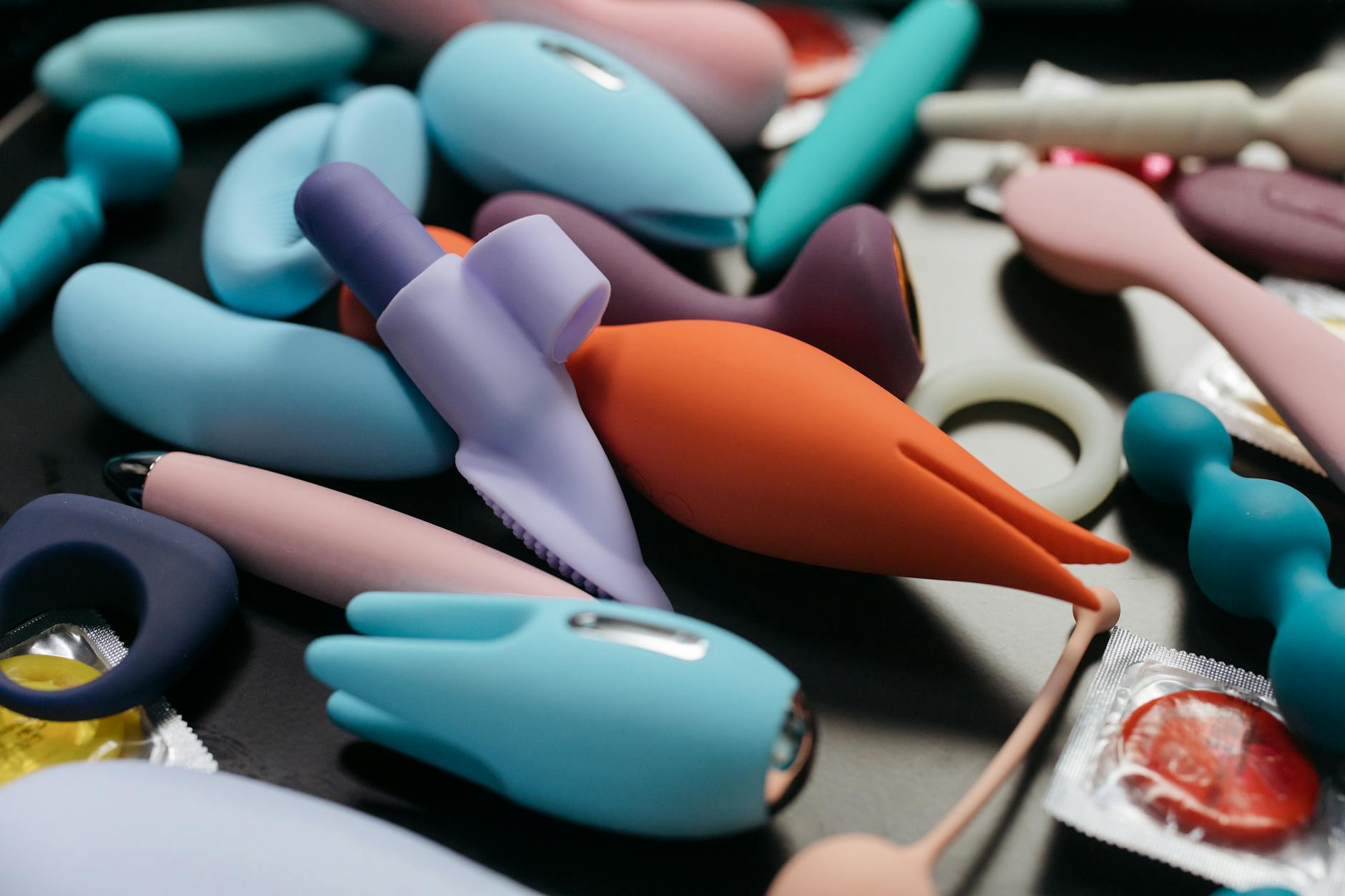
How Clitoral Vibrators Help Reduce Overstimulation and Find Your Comfort Zone
Too much of a good thing is actually a thing. Here's what overstimulation feels like, why it happens, and how to use vibrators without hitting that wall.
Clitoral overstimulation is real, it sucks, and it happens to way more people than talk about it. You're using a vibrator, things feel amazing, and then suddenly it's too much. Not in a "I'm done" way. In a "make it stop, this hurts" way. Your body goes from pleasure to pain in seconds, and you're left confused about what just happened.
This isn't a sign that something's wrong with you or that you're broken. It's actually your nervous system doing exactly what it's supposed to do. But it's also completely avoidable once you understand why it happens and how to work with your body instead of against it.
Your clitoris has roughly 8,000 nerve endings concentrated in a space smaller than a pea. That's an absurd amount of sensitivity packed into a tiny area. When vibration hits those nerves at high intensity for too long, the sensory input gets too loud. Your nervous system basically says "okay, we're done here" and switches from pleasure to discomfort or pain.
This is different from numbness or desensitization, which is a separate thing entirely. Overstimulation is acute. Desensitization is cumulative. You need to know the difference because the fix is completely different.
With lemon clitoral vibrators and similar devices, overstimulation happens fastest on the highest intensity settings. But here's the plot twist: you don't need the highest setting to reach orgasm. In fact, most people reach orgasm faster and more reliably on medium to medium-high settings than they do pushing the device to maximum.
I've worked with hundreds of people who assume that turning the vibrator all the way up will give them the strongest orgasm. The logic makes sense. It doesn't work that way. Here's why.
Intensity past a certain threshold stops adding pleasure and starts subtracting it. Your nervous system has a capacity. Exceed it, and you hit a wall. The lem vibrator, like other clitoral vibrators, works through rapid pattern stimulation. You're looking for the sweet spot where your body can sustain arousal and build toward orgasm. That sweet spot is almost never at maximum intensity.
Think of it like volume on a speaker. You want to hear the music, not get blasted out of the room. The best listening experience isn't at full volume. It's at the point where you can feel every detail without your ears ringing.
Start low and notice what happens. I mean this literally. Use pattern 1 or 2 on your vibrator for a full 2-3 minutes before you even think about turning it up. Let your body wake up. Your clitoris needs time to become engorged and sensitive.
Then move up one pattern or intensity level. Stay there for another 2-3 minutes. The point is not to reach orgasm as fast as possible. The point is to map your own sensitivity landscape. Where does it feel good? Where does it start to get too intense? That information is gold.
Most people find their sweet spot somewhere between intensity level 3 and 7 on a 10-point scale. That's where arousal builds smoothly and orgasms happen without that sudden switch to overstimulation.
Here's something weird that catches a lot of people off guard. You can absolutely use a vibrator at lower intensity if you reduce the pressure at the same time. Holding the vibrator against your clitoris with medium pressure and medium intensity often feels better than light pressure at high intensity.
Pressure and intensity work together. They're not separate variables. When you use a lemon sucker or air-suction vibrator like The Lem, this becomes especially clear because the sensation is already amplified by the suction effect. You need even less intensity from the vibration pattern itself.
If you find yourself hitting overstimulation on a vibrator, try keeping the intensity the same but reducing how firmly you're pressing it against your body. That single adjustment often solves the problem.
When you use a clitoral vibrator in your cycle matters. During your follicular phase (after your period, before ovulation), your clitoris is less sensitive. You might need higher intensity to feel the same pleasure. During your luteal phase (after ovulation, before your period), your clitoris is more sensitive. You'll probably need to dial back the intensity to avoid overstimulation.
If you're on hormonal birth control, your sensitivity stays relatively flat across the month. If you've just switched off hormonal birth control or switched to a non-hormonal method, your sensitivity will start fluctuating again. This is a normal adjustment period.
Stress, sleep, hydration, and arousal level all shift your sensitivity too. A vibrator setting that felt perfect last week might be too intense today. That's not a malfunction. That's your body being a living, breathing system that changes based on context.
If every time you use a vibrator you hit overstimulation within a few minutes, something else might be going on. You could be starting too high. You could have nerve sensitivity that needs a gentler approach. You could need a longer warm-up.
You could also be dealing with genital anxiety or anticipatory tension. If you're worried that overstimulation is going to happen, your pelvic floor tightens in response. A tightened pelvic floor makes overstimulation more likely. You're basically creating the thing you're trying to avoid.
In that case, the fix isn't a different vibrator. It's permission and patience. Spend time with your body when you're not trying to have an orgasm. Use vibrators at low intensity just to explore sensation. Let your nervous system learn that vibration equals good things, not overstimulation.
Lubricant reduces friction and changes the sensation profile of vibration. With lube, you often need less intensity because the vibration travels more smoothly across tissue. Without lube on sensitive tissue, you might feel like you need higher intensity to get the same sensation, but what you're actually feeling is friction discomfort masquerading as intensity.
Use water-based lube with silicone vibrators. It's slicker, lasts longer, and actually reduces the chance of overstimulation because it creates a smoother interface between the vibrator and your body.
If you do hit overstimulation, stop immediately. Your clitoris will be sensitive for a while afterward. That's normal. Take a break, drink water, do something else for 20-30 minutes before you try again.
Your body isn't punishing you. It's protecting you. Respect that signal. The best thing you can do is stop, breathe, and remember that you have all the time in the world. Pleasure is not a race.
If you're using a lemon vibrator or other clitoral vibrators with a partner, communication here is huge. Tell them what intensity level you're using and why. Tell them that medium intensity isn't compromise or settling. It's actually where the magic happens.
Many partners worry that using a vibrator means they're "not enough." The conversation about overstimulation changes that. You're not trying harder. You're being smarter. You're creating conditions where pleasure can actually build instead of hitting a ceiling and crashing.
Overstimulation feels uncomfortable or painful. Your body tenses up. You might feel rawness or a numbing sensation. Being done just means you're satisfied. You feel calm and relaxed. The difference is obvious once it happens to you once.
No. Your clitoris is resilient. Overstimulation is acutely uncomfortable, but it doesn't cause lasting harm. Rest it for 20-30 minutes and you'll be fine.
Vibrators deliver consistent, rapid stimulation. Your hand naturally varies rhythm and pressure. That variation actually protects you from overstimulation because your nervous system gets micro-breaks. If you want vibrator stimulation to feel more like manual touch, use lower intensity and try varying the pattern if your device has multiple options.
No. Numbness is cumulative. You use vibrators regularly and gradually feel less sensation over time. Overstimulation is acute and immediate. The fix for numbness is taking breaks from vibrators. The fix for overstimulation is using lower intensity and more varied stimulation.
Maybe, but probably not. Try all the adjustments first. Lower intensity. More lube. Different pressure. Longer warm-up time. Different time in your cycle. Most people solve overstimulation issues without switching devices. That said, if you've tried everything and a different vibrator works better, that's valid information too.
Not really. Your nerve capacity is what it is. You can find ways to use intensity more effectively, but you can't rewire your nervous system to tolerate unlimited intensity. And honestly, you don't need to. Your comfort zone is the right zone.
The goal isn't to reach maximum intensity. The goal is to reach pleasure on your terms, without your body hitting a wall. Once you stop fighting that and start working with it, everything changes.